Project Background
The cyclohexanol production process via hydration method was initially introduced by Shenma Group from Asahi Kasei Corporation of Japan. Currently, it ranks among China’s most advanced cyclohexanol preparation technologies, adopting two hydration reactors connected in series for the reaction. Inside each hydration reactor, a horizontal grid partition divides the vessel into a reaction section and a settling section.
In the reaction section, cyclohexene reacts with water under conditions of 0.6 MPa and 126°C in the presence of hydration catalyst to produce cyclohexanol. Materials are separated from catalyst in the settling section, and the separated materials overflow to downstream systems for refining. The hydration catalyst operates in a fluidized bed mode, with fresh catalyst featuring a particle size of 1~3 μm.

Existing Technical Problems
In the cyclohexanol production process via hydration method, hydration catalyst loss mainly occurs inside the hydration reactor. The catalyst has tiny particle sizes; continuous abrasion during catalytic reactions further reduces particle diameters, making catalyst particles prone to escaping with process media. This results in direct economic losses and numerous adverse impacts on the system. Such catalyst loss is inherent to the process and cannot be completely avoided.
Adverse Consequences of Catalyst Loss
Loss of costly hydration catalyst and discharge loss of finished cyclohexanol product
Blockage of towers, evaporators and other equipment
Catalyst particles accumulate and block trays inside the cyclohexanol separation tower as well as evaporators. This limits operating load, cuts output and triggers unscheduled shutdowns for maintenance.
Massive steam consumption by evaporators for gasification, impurity removal and separation of escaped catalyst and product
Heavy environmental pressure arising from disposal of catalyst-laden waste oil separated during gasification impurity removal
Yongxin’s Solution
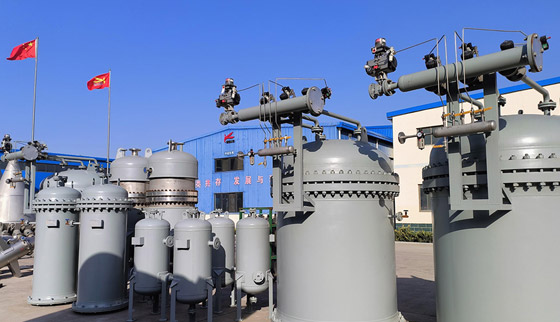
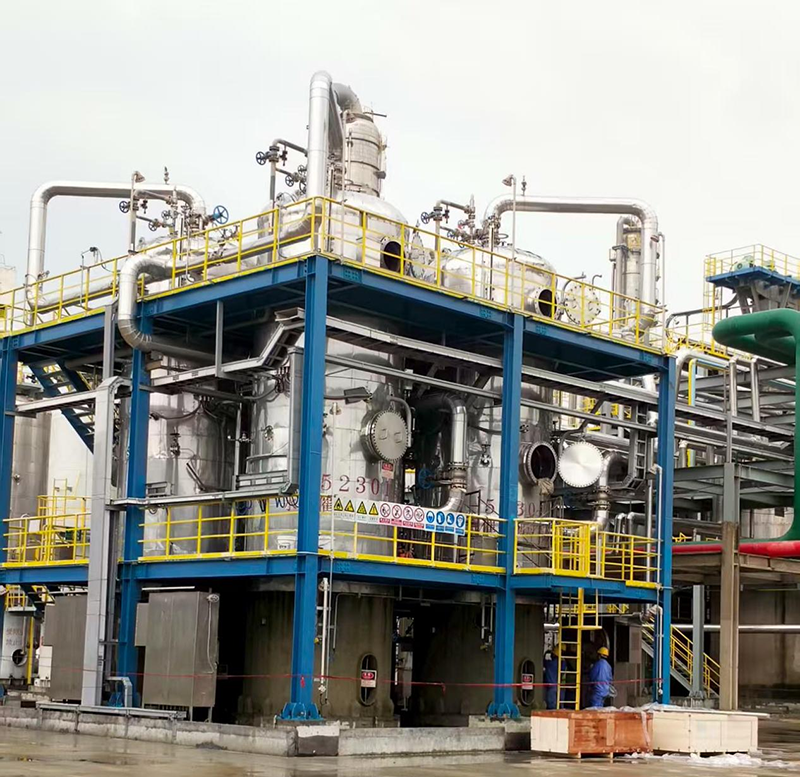
Install a hydration catalyst filter at the outlet of the hydration reactor. The mixed liquid of cyclohexene and cyclohexanol carrying catalyst particles flows out of the hydration reactor and enters the filter under working conditions of 0.5 MPa and 126°C. The distributor, coalescing plates and asymmetric sintered membrane elements intercept solid hydration catalyst particles in the feed liquid. The trapped catalyst is regularly discharged to Vessel 600# and recycled back to the reactor.
This ensures stable normal operation of downstream rectification towers and boosts overall plant capacity. When the differential pressure across the filter rises excessively or temporary shutdown conditions are available, the filter can undergo ultrasonic regeneration after pressure relief and then be put back into service.
An ultrasonic cleaning module is integrated inside the filter. The working principle of ultrasonic cleaning is as follows: an ultrasonic generator emits high-frequency oscillation signals, which are converted into high-frequency mechanical vibrations via transducers and transmitted into the medium. Ultrasonic waves radiate forward alternately densely and sparsely in the cleaning solution, driving liquid flow and generating tens of thousands of microbubbles.
Microbubbles (cavitation nuclei) suspended in the liquid vibrate under the sound field. When sound pressure reaches a certain threshold, bubbles expand rapidly and collapse abruptly, generating shockwaves with pressures up to thousands of atmospheres around them. The explosive shockwaves generated during bubble collapse break insoluble contaminants and disperse them into the cleaning fluid.
When hydration catalyst sticks to filter elements wrapped in oil stains, the oil is emulsified, separating the catalyst which then sinks to the equipment bottom, thus cleaning the filter surface. Ultrasonic waves feature inherent penetrating power, capable of cleaning workpieces with complex surfaces and special shapes, delivering excellent cleaning effects for tiny holes and gaps.
Economic Benefits
(1) Reduced Consumption of Hydration Catalyst
Current parameters: catalyst price = 50,000 CNY per ton; monthly catalyst replenishment = 2 tons.
After renovation, considering catalyst abrasion and deactivation, the new replenishment volume is conservatively estimated at 10% of the original amount.
Estimated annual benefit:
2 t/month × 11 months/year × (1 − 10%) × 50,000 CNY/t = 990,000 CNY per year
(2) Lower Steam Consumption
After decommissioning the gasification impurity removal process, steam consumption drops by approximately 2.5 t/h. Higher conversion rate further cuts reactor steam usage by about 0.5 t/h. Steam price is calculated at 150 CNY per ton.
Estimated annual benefit:
(2.5 t/h + 0.5 t/h) × 150 CNY/t × 8,000 operating hours/year = 3,600,000 CNY per year
(3) Energy Saving, Emission Reduction & Waste Valorization
After project implementation, the plant will stop discharging 12 tons of X oil monthly from the gasification impurity removal system (cyclohexanol concentration ≥72%, price ~1,900 CNY/t). Monthly fuel oil discharge from the cyclohexene stripping tower bottom will be reduced by 18 tons (cyclohexanol concentration ≥90%, price ~2,000 CNY/t). The market price of cyclohexanol is around 7,500 CNY per ton.
Estimated benefit from X oil recovery:
12 t/month × 11 months/year × 72% × (7,500 − 1,900) CNY/t = 532,300 CNY per year
Estimated benefit from tower bottom fuel oil recovery:
18 t/month × 11 months/year × 90% × (7,500 − 2,000) CNY/t = 980,000 CNY per year
Total annual benefit of waste resource utilization:
532,300 CNY/year + 980,000 CNY/year = 1,512,300 CNY per year



 0373-7722918